
When a Diagnosis Changes a Family: Shame, Hope, Intimacy, and Growth in Families Supporting a Member Living with Dementia
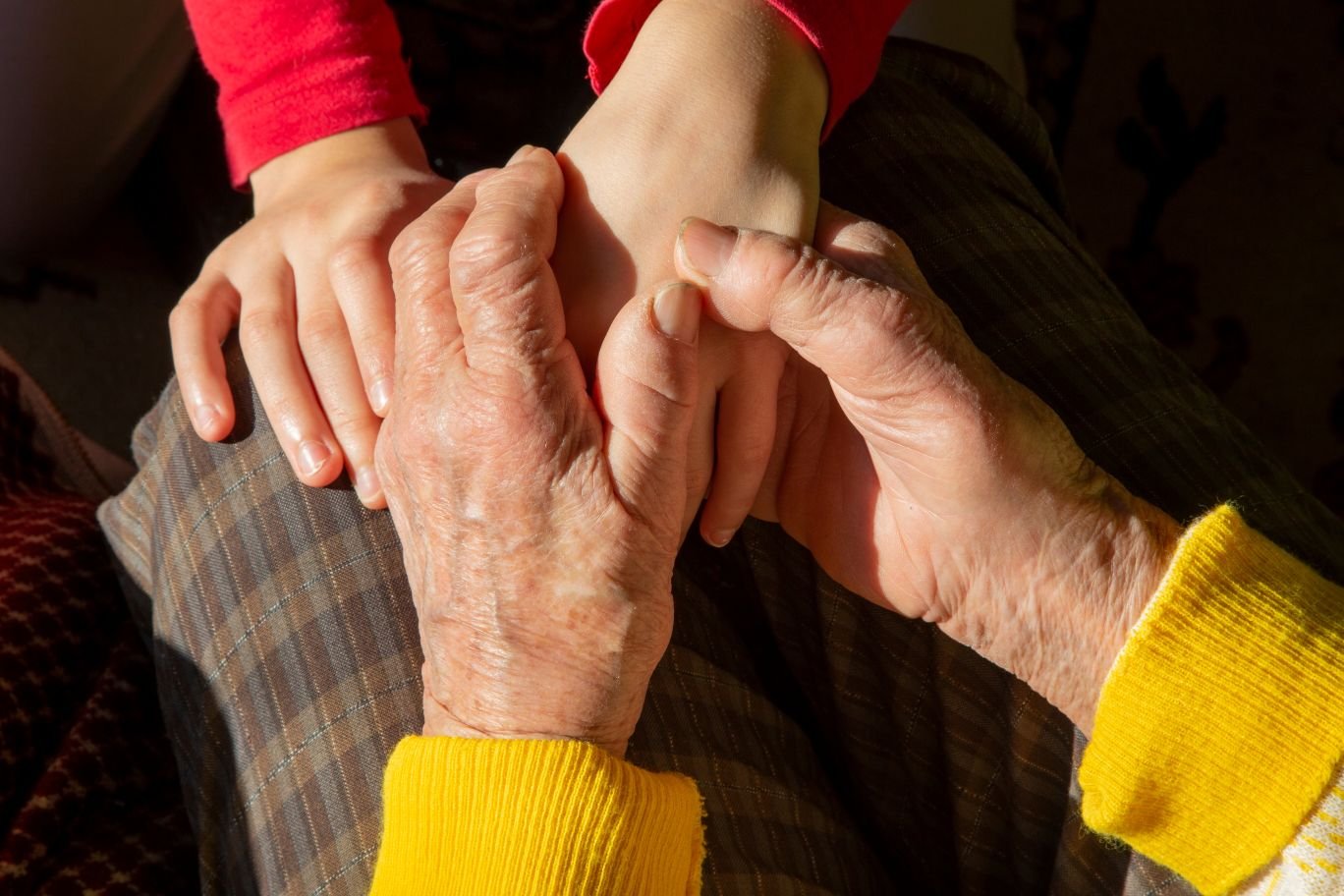
A Moment of Change
When a family member receives a diagnosis of dementia, it is an event that leaves the entire family on a shifting landscape of change. Roles and relationships start to change. And given the stigma and secrecy that often surrounds a dementia diagnosis, embarrassment and shame take hold.
For many families, supporting a member living with dementia is marked by confusion, grief, and relational loss — as friends stop visiting and some family members withdraw in distress from the person at the centre of it all. Yet research indicates that this same experience, however unwelcome, can also become a turning point for unexpected growth, deeper intimacy, and new meaning in life.
This article draws on a qualitative study by Walmsley and McCormack (2016) published in the journal Dementia, which explored the impact of dementia on families from the unique perspective of senior health professionals with decades of experience in dementia care. Their insights highlight something that statistics fail to capture: the human arc of a family's experience when a member lives with dementia.
What the Research Shows
Walmsley and McCormack (2016) interviewed senior health care professionals — including directors of care, palliative care GPs, aged care chaplains, and nurse unit managers — with between 6 and 40 years of experience in dementia care. The researchers were interested in how families make sense of their journey with dementia, both positively and negatively, from the view of those senior health care professionals who stand alongside.
The analysis revealed one overarching theme — Dementia Naivety; Redefined Intimacy — which contained four interconnected threads:
1. Embarrassed Shame — the stigma and secrecy that often surrounds a diagnostic label given to their family member
2. Maintaining Hope — sometimes a diagnosis prompted disconnection, hurt, and avoidance; sometimes it triggered a frenetic search for a cure
3. Redefining a Model of Intimacy — learning to connect in new ways by connected what was with what could be; and observing advocacy, integrity, and relational intimacy
4. Redefined Relational Intimacy and Growth — where psychological wellbeing became possible, evidenced by acceptance, hope, relational intimacy, and advocacy for other families
The Weight of Stigma
Senior health professionals observed that families frequently responded to a dementia diagnosis with secrecy and shame — reluctant to name it publicly, sometimes even delaying or denying the diagnosis to shield their loved one from perceived judgement. The diagnostic label itself was experienced as a social threat, triggering fear of discovery and rejection.
Paradoxically, this shame sometimes extended to the person with dementia, who might distance themselves from others more severely impacted — revealed through a desperate reach for comparative agency in a care home environment where autonomy was already being lost.
The Double-Edged Sword of Hope
The health professionals noted that hope — though vital — could become problematic when it drove families into an exhausting search for a cure, causing them to “forget about the day-to-day” (Walmsley & McCormack, 2016, p. 1674) and miss opportunities for present-moment connection. Some family members became so focused on the horizon that they lost sight of the relationship available to them right now.
Yet when reframed adaptively, hope was also a turning point. When families shifted from ‘Why is this happening?” to a more adaptive stance of “What now?”, senior health carers observed positive redefinitions within families, including an openness to possibility, and a meaningful re-engagement with their family member living with dementia.
Retained Awareness and the Possibility of Intimacy
One of the most striking findings was the professionals' insistence on challenging assumptions of unawareness — particularly in those with more severe dementia where speech was limited or absent. Again and again, they described moments of unmistakable recognition: a face lighting up when a familiar staff-carer entered the room; a hand responding to a gentle touch; a man who hadn't spoken in months communicating comfort through his eyes.
There is a moment described by the senior health professionals in Walmsley and McCormack's study that stays with you. Regarding behaviour as meaningful and understandable to them, carers were motivated to dispel global assumptions of unawareness when speech was lacking:
“We had a man who didn’t speak the entire time that he was with us . . . he was on his deathbed . . . he was going downhill very quickly . . . he just looked really frightened . . . and then Kim came in . . . and his face just lit up the room. It was just amazing.” (Walmsley & McCormack, 2016, p. 1675).
These health carers modelled a different kind of intimacy — one grounded not in verbal exchange, but an intentional stance of presence, attunement, and the belief that relational awareness and connection remains possible, even in the final stages of dementia.
This capacity for connection beyond words has been explored in depth elsewhere. In an earlier study, Walmsley and McCormack (2014a) described this as "the dance of communication" — a relational process through which families retained meaningful connection with a member living with severe dementia, even when conventional speech was limited or absent.
Why This Matters in Midlife and Later Life
More than 57 million people live with dementia worldwide, with a new case every three seconds (World Health Organisation, 2023). In Australia, an estimated 425,000 people are living with dementia — a number projected to more than double to over 1.1 million by 2065 (Australian Institute of Health and Welfare [AIHW], 2025). For each of those individuals, a circle of family members and health carers is navigating the often uncharted territory of being alongside.
Most research focuses on the person with dementia or on ‘caregiver burden’. Less attention is paid to the full psychological arc that families travel — from initial shock, embarrassment, and shame, through grief and exhaustion, toward what Walmsley and McCormack describe as psychological growth, deeper relational intimacy, and altruistic concern for other families in similar circumstances.
For family members who find themselves in a carer role — the dementia journey doesn’t need to be experienced solely as loss. It can also become a turning point for unexpected positive change and growth despite distress.
Can families experience psychological growth alongside dementia grief?
Yes. Research in posttraumatic growth indicates that distress and growth coexist, Walmsley and McCormack (2016) found that families who moved beyond stigma came to positively redefine intimacy in the context of dementia, realised greater relational closeness, personal strength, and often a sense of contribution to others facing similar challenges.
Psychological Insights: From Shame to Growth
The framework of posttraumatic growth — developed by Tedeschi and Calhoun (1996, 2004) and extended by Joseph and Linley (2005, 2006) — proposes that adversity can precipitate not just recovery, but psychological transformation. This includes personal change (personal strengths, greater wisdom, and compassion), philosophical change (new life-priorities, enhanced sense of meaning), and relational change (new relational approaches, and a deeper appreciation of others).
Walmsley and McCormack's findings align closely with this framework. Families observed to thrive were those who moved — often non-linearly, and with professional support — from a shame-dominated experience toward greater acceptance, relational presence, and ultimately, growth. This trajectory — encompassing both the negative and positive dimensions of change — is examined directly in Walmsley and McCormack's (2014b) earlier work, which explored how family members synthesised meaning from the adversity of dementia, identifying parallel processes of loss and growth unfolding side by side. See more, in our companion article: The Dance of Communication: Staying connected in dementia without words.
In Walmsley and McCormack (2016), several psychological shifts were observed to support this positive movement in families:
Moving from 'fixing' to 'being present.' Families who relinquished the search for a cure were better able to inhabit the relationship available to them now.
Expanding the definition of communication. When family members accepted that connection could occur through touch, tone of voice, eye contact, and presence — rather than words — the quality of their interactions improved markedly.
Challenging internalised stigma. Naming and releasing the shame that still surrounds dementia, was itself a therapeutic act. When families moved beyond secrecy, they often discovered unexpected solidarity with others.
Seeing the person, not just the medical diagnosis. Senior health care professionals consistently modelled the practice of looking for the person despite dementia — the individual's retained personhood — their life history, preferences, humour, and spirit, and embodied way of being — even as cognition changed and retained awareness fluctuated.
How Upside Stories Can Play a Role
The psychological journey of dementia caregiving rarely follows a straight line; and it doesn’t need to be walked alone. At Upside Stories, we support families at every point along that journey: whether you’re still absorbing a new diagnosis, finding yourself depleted somewhere in the middle, or making sense of a caregiving experience that has already passed.
If something in this article resonated with you, our Carer's Compass program or online psychological therapy may be a good place to start. We’d welcome the chance to talk. Start with a free 20-minute consultation to explore whether we’re the right fit for you and your family.
Book now
References & reading
Australian Institute of Health and Welfare. (2025). Dementia in Australia. AIHW, Australian Government. https://www.aihw.gov.au/reports/dementia/dementia-in-aus
Joseph, S., & Linley, P. A. (2005). Positive adjustment to threatening events: An organismic valuing theory of growth through adversity. Review of General Psychology, 9(3), 262–280. https://doi.org/10.1037/1089-2680.9.3.262
Joseph, S., & Linley, P. A. (2006). Growth following adversity: Theoretical perspectives and implications for clinical practice. Clinical Psychology Review, 26(8), 1041–1053. https://doi.org/10.1016/j.cpr.2005.12.006
Tedeschi, R. G., & Calhoun, L. G. (1996). The Posttraumatic Growth Inventory: Measuring the positive legacy of trauma. Journal of Traumatic Stress, 9(3), 455–471. https://doi.org/10.1002/jts.2490090305
Tedeschi, R. G., & Calhoun, L. G. (2004). Posttraumatic growth: Conceptual foundations and empirical evidence. Psychological Inquiry, 15(1), 1–18. https://doi.org/10.1207/s15327965pli1501_01
Walmsley, B. D., & McCormack, L. (2014a). The dance of communication: Retaining family membership despite severe non-speech dementia. Dementia, 13(5), 626–641. https://doi.org/10.1177/1471301213480445
Walmsley, B. D., & McCormack, L. (2014b). Synthesis of meaning: Negative and positive change in family members following the adversity of dementia. Journal of Humanistic Psychology. https://doi.org/10.1177/0022167814557547
Walmsley, B. D., & McCormack, L. (2016). Shame, hope, intimacy and growth: Dementia distress and growth in families from the perspective of senior aged care professionals. Dementia, 15(6), 1666–1684. https://doi.org/10.1177/1471301215573676
World Health Organisation. (2023). Dementia. https://www.who.int/news-room/fact-sheets/detail/dementia
